Federated Learning at the Edge: Revolutionizing AI for IoT Data
Explore the groundbreaking convergence of Federated Learning and Edge AI, a paradigm shift for processing vast IoT data. Discover how this approach prioritizes privacy, efficiency, and real-time responsiveness, essential for next-gen intelligent systems.
The digital world is awash with data, and at its forefront stands the Internet of Things (IoT) – a sprawling network of billions of interconnected devices, from smartwatches to industrial sensors, constantly generating torrents of information. This data holds immense potential for intelligence, but harnessing it efficiently and responsibly presents a monumental challenge. Traditional cloud-centric AI approaches, while powerful, often fall short when confronted with the sheer volume, sensitivity, and real-time demands of IoT data.
Enter a groundbreaking convergence: Federated Learning at the Edge. This paradigm shift is not merely an optimization; it's a fundamental re-imagining of how AI can operate in a distributed world, prioritizing privacy, efficiency, and responsiveness. For AI practitioners and enthusiasts alike, understanding this intersection is no longer optional; it's essential for building the next generation of intelligent systems that are both powerful and ethical.
The Foundation: Deconstructing the Pillars
To truly appreciate Federated Learning at the Edge, let's first break down its core components:
-
Internet of Things (IoT): Imagine a world where every physical object, from your refrigerator to a city's traffic light, is embedded with sensors, software, and connectivity, allowing it to collect and exchange data. This is the IoT. Its ubiquity means data is generated at an unprecedented scale, often at the "edge" of the network, far from centralized data centers. Examples range from consumer devices like smart speakers and fitness trackers to industrial machinery and agricultural sensors.
-
Edge Computing: The traditional model of sending all data to a centralized cloud for processing is increasingly unsustainable for IoT. Edge computing addresses this by bringing computation and data storage closer to the data source – the "edge" of the network. This proximity dramatically reduces latency, conserves bandwidth, and enhances reliability, making real-time decision-making feasible even with intermittent connectivity. Think of it as moving the brain closer to the senses.
-
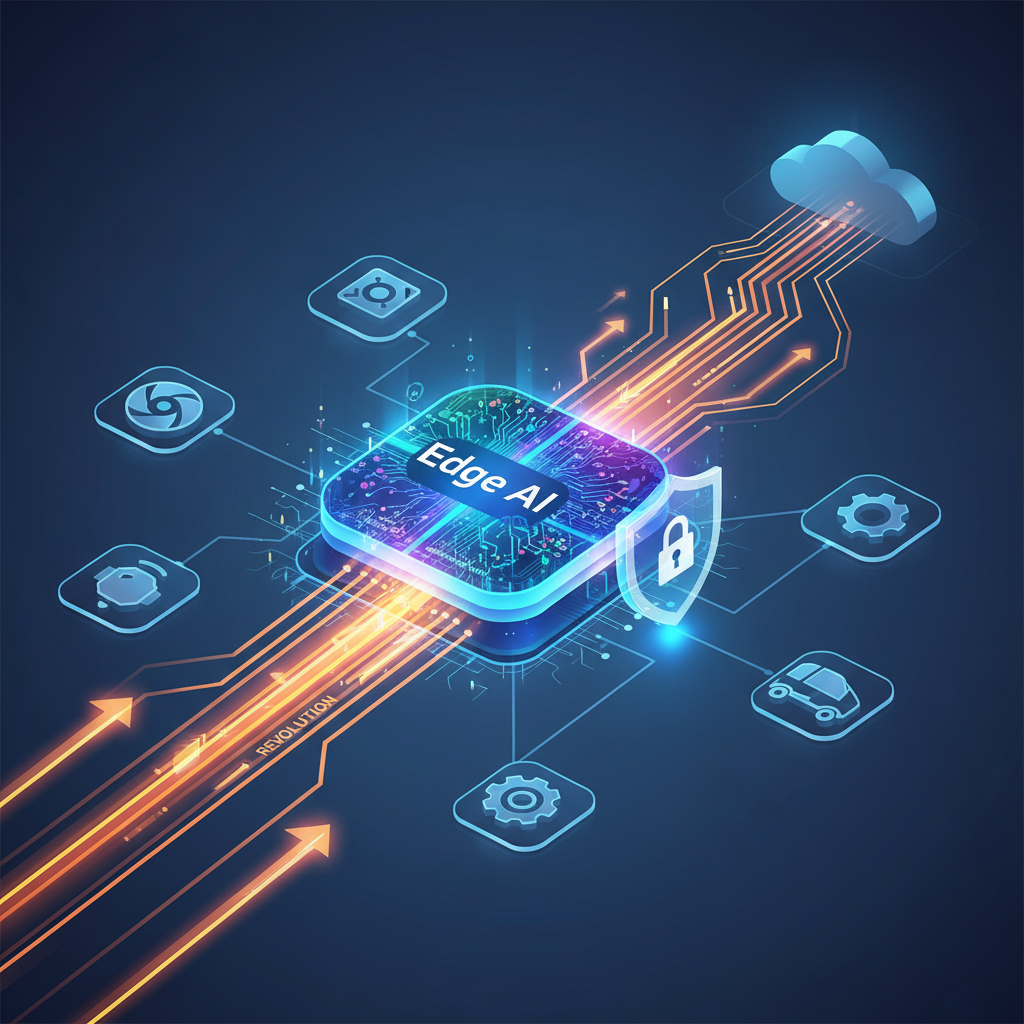
AI at the Edge: This takes edge computing a step further by deploying Artificial Intelligence models directly onto edge devices. Instead of relying on constant cloud communication for inference or even training, AI models can analyze data locally. This enables instantaneous responses, crucial for applications like autonomous vehicles or predictive maintenance in factories, where milliseconds matter.
-
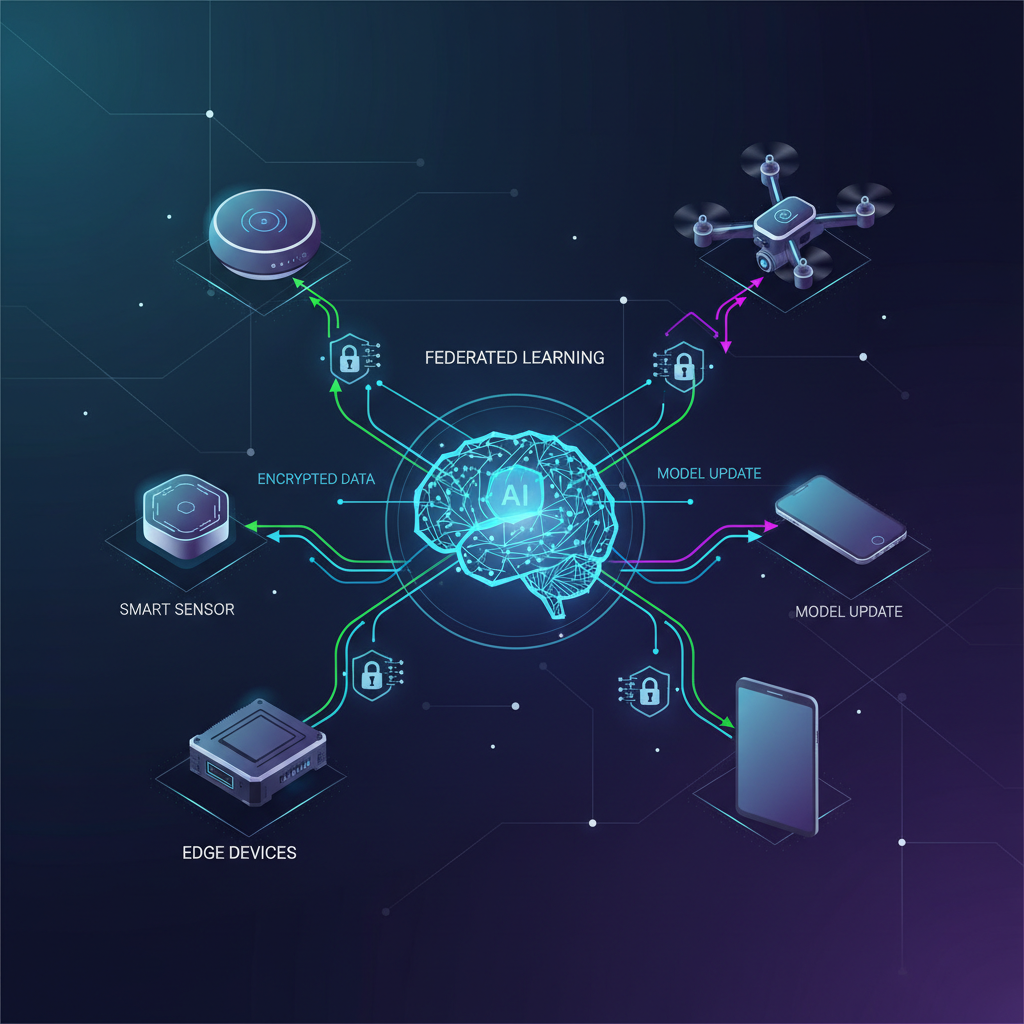
Federated Learning (FL): This is the game-changer for privacy and distributed intelligence. Federated Learning is a distributed machine learning approach that allows multiple clients (e.g., individual IoT devices, smartphones, or even organizations) to collaboratively train a shared global model without ever sharing their raw, local data. Instead, each client trains a local model on its private dataset, and then only sends model updates (like gradients or weights) to a central server. The server aggregates these updates to improve the global model, which is then sent back to the clients for further local refinement. The raw data never leaves the device.
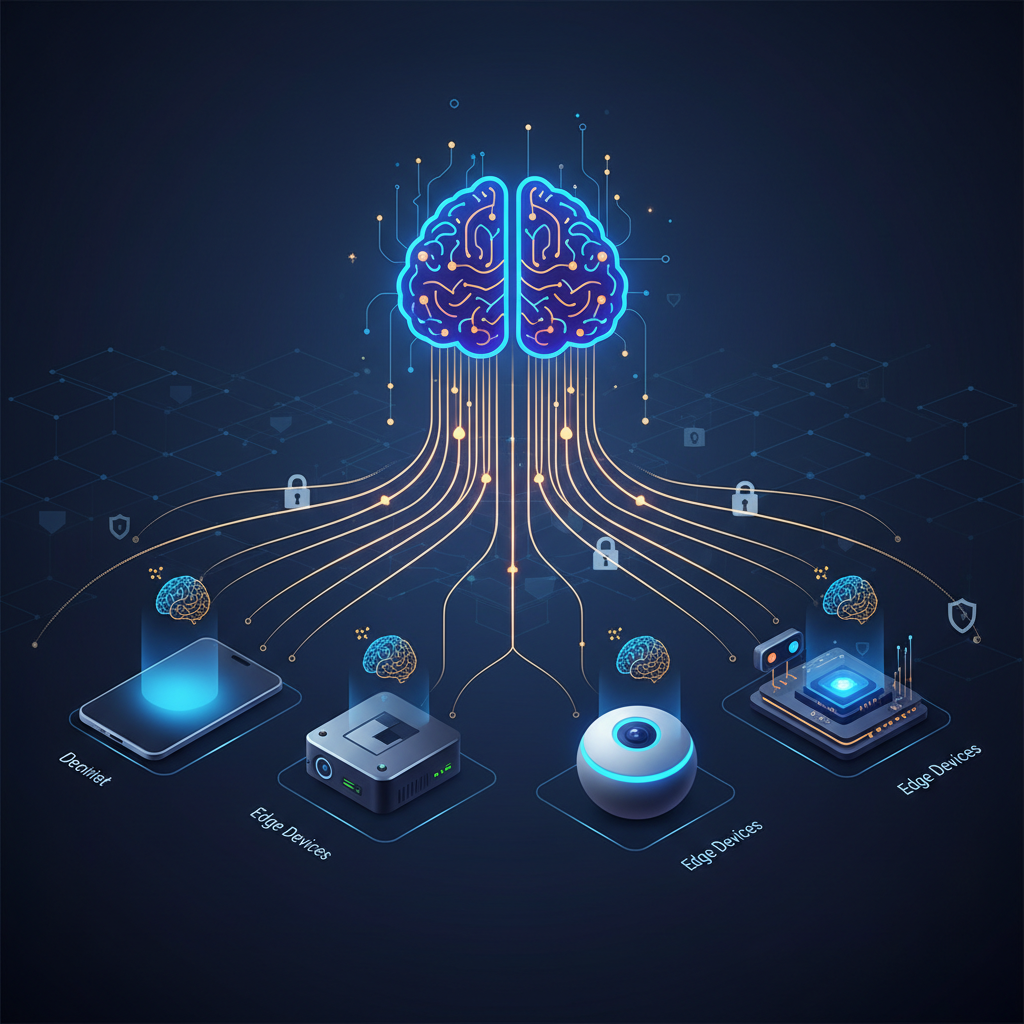
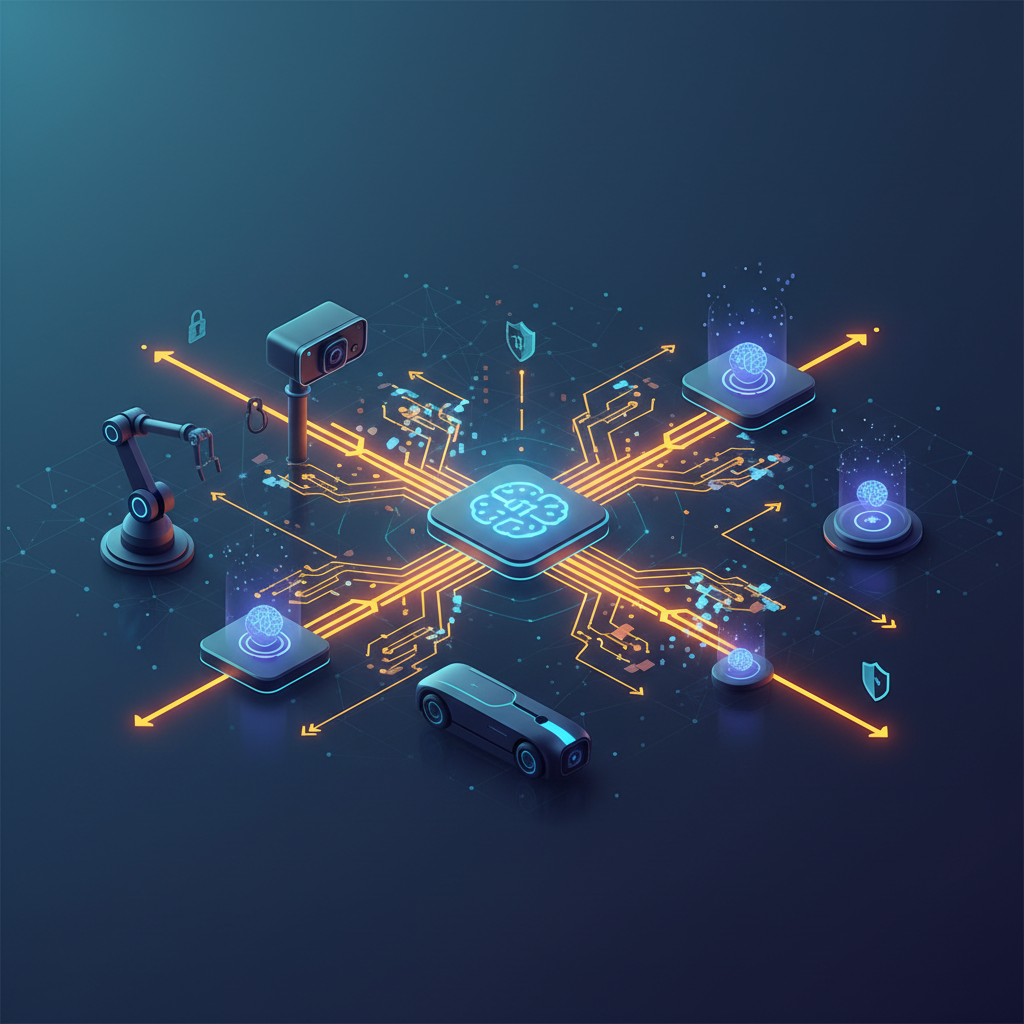
Bringing it all together: Federated Learning at the Edge means that individual IoT devices act as the "clients" in an FL setup. They collect data, train AI models locally using their unique data, and then transmit only the learned model parameters – not the sensitive raw data – to an edge server or a central cloud server. This server aggregates these updates, synthesizes a more robust global model, and then distributes it back to the devices. This cycle repeats, allowing devices to continuously learn from the collective intelligence while preserving individual data privacy.
Why Now? The Timeliness and Impact
The confluence of these technologies is not accidental; it's a direct response to pressing challenges and emerging opportunities in the digital landscape.
-
The IoT Data Deluge: The sheer volume of data generated by billions of IoT devices is staggering. Cisco predicts that connected devices will generate over 79.4 zettabytes of data by 2025. Sending all this data to the cloud is economically unfeasible, bandwidth-intensive, and prone to latency issues. FL at the edge offers a scalable solution by processing data where it originates.
-
Escalating Privacy Concerns and Regulations: With regulations like GDPR, CCPA, and countless others, data privacy is no longer an afterthought but a fundamental design principle. Many IoT applications deal with highly sensitive information – personal health data from wearables, video feeds from smart cameras, proprietary industrial processes. Federated Learning's core tenet of "data stays on device" inherently addresses these concerns, making it a powerful tool for compliance and building user trust.
-
Maturation of Edge AI Hardware: The past few years have seen remarkable advancements in specialized, energy-efficient AI accelerators (e.g., NPUs, TPUs, custom ASICs) designed for edge devices. These powerful chips make it increasingly feasible to perform complex AI tasks, including on-device model training and inference, on resource-constrained IoT devices, unlocking FL's full potential.
-
Reduced Latency and Enhanced Responsiveness: For critical applications like autonomous systems, industrial control, or remote surgery, real-time decision-making is paramount. By performing inference and collaborative learning at the edge, FL significantly reduces the round-trip time to a central cloud, enabling quicker, more responsive actions.
-
Bandwidth Efficiency: Transmitting raw video streams, sensor readings, or health metrics from millions of devices consumes enormous network resources. In FL, only compact model updates (typically kilobytes or megabytes, compared to gigabytes or terabytes of raw data) are transmitted, drastically reducing network load and operational costs.
-
Robustness to Connectivity Issues: IoT devices often operate in environments with intermittent or unreliable network connectivity. FL allows devices to continue learning and operating locally even when offline, synchronizing updates when connectivity is restored, enhancing system resilience.
-
Personalization at Scale: FL enables the development of highly personalized models. A smart thermostat, for instance, can learn your unique heating and cooling preferences without sharing your home's temperature data with a central server, while still benefiting from general improvements derived from other users.
Recent Developments and Emerging Trends
The field of Federated Learning at the Edge is dynamic, with continuous innovation addressing its unique challenges.
-
Hardware Acceleration for On-Device Training: The focus is shifting from just inference to enabling more sophisticated on-device training. Companies like Google, Apple, and various chip manufacturers are investing heavily in designing AI hardware that can efficiently handle backpropagation and gradient computations on edge devices, even with limited power budgets. This is crucial for making FL practical for a wider range of IoT devices.
-
Communication Efficiency Techniques: While FL reduces bandwidth, transmitting model updates for large models across millions of devices can still be substantial. Researchers are developing techniques like:
- Quantization: Reducing the precision of model weights (e.g., from 32-bit floats to 8-bit integers) to shrink update size.
- Sparsification: Sending only the most significant model updates, effectively compressing the information.
- Asynchronous Aggregation: Allowing clients to send updates at their own pace, rather than waiting for a synchronized round, improving system throughput.
- Client Selection Strategies: Intelligently choosing which devices participate in each training round based on data quality, connectivity, or computational resources to optimize training efficiency and model quality.
-
Enhanced Security and Trust in FL: While privacy-by-design, FL isn't immune to attacks. Active research areas include:
- Differential Privacy (DP): Adding carefully calibrated noise to model updates to mathematically guarantee that individual data points cannot be inferred, even from aggregated updates.
- Secure Multi-Party Computation (SMC): Cryptographic techniques that allow multiple parties to jointly compute a function over their inputs while keeping those inputs private. This can be used for secure aggregation of model updates.
- Homomorphic Encryption (HE): A powerful cryptographic method that allows computations to be performed on encrypted data without decrypting it first, offering the strongest privacy guarantees for model aggregation.
- Robustness against Malicious Clients: Developing methods to detect and mitigate data poisoning attacks (where malicious clients send corrupted updates to degrade the global model) or model inversion attacks (attempting to reconstruct training data from model updates).
-
Fairness and Bias in FL: IoT data is inherently non-IID (non-independently and identically distributed) – different devices will have different data distributions. This can lead to fairness issues or bias in the global model if not addressed. Research focuses on aggregation techniques and model architectures that can handle data heterogeneity and ensure equitable performance across diverse client populations.
-
Personalized Federated Learning: Moving beyond a single global model, this trend aims to combine the benefits of global knowledge with individual device customization. Techniques involve training a strong global model as a foundation, which each device then fine-tunes with its local data, resulting in a personalized model that benefits from collective intelligence without sacrificing individual relevance.
-
Cross-Device vs. Cross-Silo FL:
- Cross-Device FL: The canonical example, involving millions of resource-constrained devices (e.g., smartphones, wearables) contributing to a global model. This is characterized by a large number of clients, often with intermittent connectivity and limited computation.
- Cross-Silo FL: Involves fewer, but more powerful, entities (e.g., hospitals, banks, factories) collaboratively training a model. Each "silo" has substantial computational resources and a large dataset. This is particularly relevant for industrial IoT and inter-organizational data sharing.
-
Integration with MLOps for Edge AI: As FL deployments scale, managing the lifecycle of models (training, deployment, monitoring, retraining) across thousands or millions of edge devices becomes complex. New MLOps tools and frameworks are emerging to streamline this process, enabling continuous integration and continuous deployment (CI/CD) for federated edge AI.
Practical Applications: Where FL at the Edge Shines
The theoretical promise of Federated Learning at the Edge is already translating into transformative real-world applications across diverse sectors:
-
Smart Cities & Surveillance:
- Traffic Management: AI models on roadside cameras can analyze traffic flow, detect anomalies (e.g., accidents, illegal parking), and optimize signal timings. With FL, these cameras can collaboratively learn better traffic patterns without sending sensitive video footage to a central cloud, enhancing privacy and reducing bandwidth.
- Environmental Monitoring: Sensors detecting air quality or noise levels can train models to identify pollution hotspots or unusual sounds, contributing to city-wide environmental intelligence without centralizing all raw sensor data.
-
Healthcare & Wearables:
- Personalized Health Monitoring: Smartwatches and medical sensors can continuously monitor vital signs, activity levels, and sleep patterns. FL allows these devices to train personalized models for anomaly detection (e.g., predicting cardiac events, detecting early signs of illness) using highly sensitive patient data that never leaves the device, ensuring HIPAA compliance and patient privacy.
- Drug Discovery & Clinical Trials: Multiple healthcare institutions can collaboratively train models on patient data to identify disease biomarkers or predict drug efficacy, without sharing raw patient records, accelerating medical research while upholding strict privacy standards.
-
Industrial IoT (IIoT):
- Predictive Maintenance: Sensors on factory machinery can monitor vibrations, temperature, and performance metrics. FL enables these machines to collectively learn patterns indicative of impending failures, allowing for proactive maintenance. The proprietary operational data remains within the factory's secure edge network, protecting intellectual property and operational security.
- Quality Control & Anomaly Detection: Cameras and sensors on production lines can train models to identify defects or deviations from quality standards in real-time, improving efficiency and reducing waste, all while keeping sensitive manufacturing data on-premises.
-
Smart Homes & Consumer Electronics:
- Personalized Voice Assistants: Devices like smart speakers can learn individual user accents, vocabulary, and preferences to improve speech recognition and command interpretation. FL allows this personalization to happen locally, enhancing user privacy by not sending voice recordings to cloud servers.
- Smart Appliance Control: Refrigerators learning your grocery habits, thermostats optimizing energy based on your schedule – these devices can become smarter and more energy-efficient by learning locally and collaboratively, without compromising household privacy.
-
Autonomous Vehicles:
- Collaborative Perception & Navigation: Self-driving cars generate petabytes of data daily. FL allows vehicles to collaboratively train models for object detection, lane keeping, and predictive driving behaviors. Each vehicle contributes its learned experiences (e.g., identifying a new type of obstacle) to a global model, which is then shared back, improving the collective intelligence of the fleet without exchanging massive, sensitive raw driving data.
-
Mobile Keyboards & Predictive Text:
- Google's Gboard is a pioneering example. Federated Learning is used to improve the predictive text and next-word suggestion models. Your phone learns your unique typing style and vocabulary locally, and only aggregated, anonymized model updates are sent to Google, ensuring your private conversations remain private while the keyboard becomes smarter for everyone.
Challenges and Future Directions
Despite its immense promise, Federated Learning at the Edge is not without its hurdles. Addressing these challenges will define its future trajectory:
-
Non-IID Data Distribution: The most significant challenge. Data across IoT devices is rarely uniformly distributed. This heterogeneity can lead to slower convergence, reduced model accuracy, or even divergence if not properly handled. Research into robust aggregation algorithms and personalized FL approaches is crucial here.
-
Resource Constraints: Many IoT devices have limited computational power, memory, and battery life. Performing on-device training, even for model updates, can be taxing. Optimizing model architectures, quantization techniques, and efficient training algorithms for low-power environments remains a key focus.
-
Communication Overhead: While reduced, transmitting model updates for large, complex models across millions of intermittently connected devices can still be a bottleneck. Further innovations in communication-efficient FL (e.g., advanced compression, intelligent client selection, asynchronous methods) are essential.
-
Security Vulnerabilities: Despite privacy benefits, FL is not entirely secure. Malicious clients can attempt data poisoning (sending bad updates) or model inversion attacks (trying to reconstruct training data from updates). Robust defense mechanisms, including cryptographic techniques and anomaly detection for updates, are critical.
-
Deployment and Management Complexity: Orchestrating FL training across a vast, dynamic, and potentially unreliable network of diverse IoT devices is a significant operational challenge. Tools for model versioning, monitoring, debugging, and secure update distribution are still maturing.
-
Regulatory Landscape: The legal and ethical implications of AI and data privacy are constantly evolving. Navigating these complex regulations across different jurisdictions, especially when dealing with sensitive data, will require careful consideration and adaptable FL frameworks.
Conclusion
Federated Learning at the Edge represents a profound paradigm shift, moving us beyond the traditional cloud-centric AI model towards a more distributed, private, and efficient future. It's not just a theoretical concept but a critical enabler for the next generation of intelligent IoT applications that respect user privacy, operate with low latency, and conserve valuable network resources.
For AI practitioners, understanding its principles, current challenges, and emerging solutions offers a profound advantage. It equips them to design and deploy real-world AI systems that are not only powerful and accurate but also ethical, compliant, and robust in the face of the ever-growing demands of the Internet of Things. The journey of Federated Learning at the Edge is just beginning, and its impact on how we interact with and benefit from intelligent devices will be nothing short of revolutionary.